
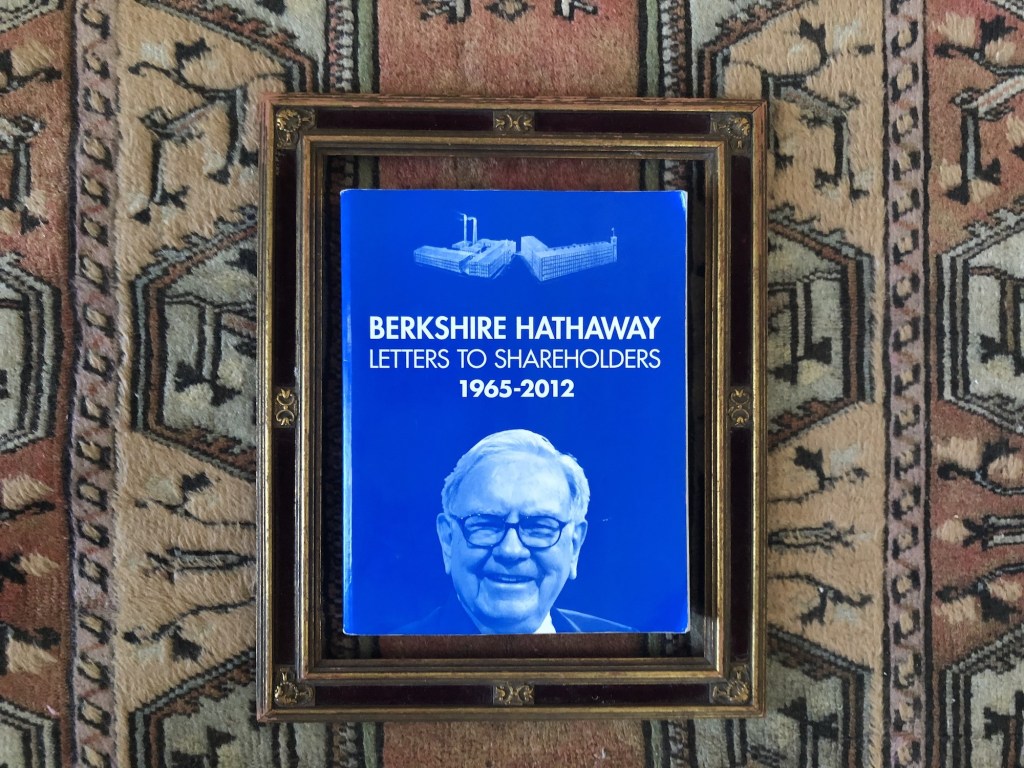
Remember Warren Buffett? Yes, he’s still alive! People seem to have forgotten the Oracle of Omaha over the past 24 months as they were busy running with the bulls.
If you are buying a company or taking a stock ownership in one over the next few years, disregarding the giant inflationary elephant in the room is akin to investment-return suicide. As markets correct and valuations still remain pricey, especially for the types of companies that you want to be holding—those that generate way more cash than they consume. I decided it would be interesting to take a look at how Warren Buffett viewed inflationary pressures on corporate America back in 1981—albeit, in a completely different economic environment. In his letter to shareholders, he wrote:
But inflation takes us through the looking glass into the upside-down world of “Alice in Wonderland.” When prices continuously rise, the “bad” business must retain every nickel that it can. Not because it is attractive as a repository for equity capital, but precisely because it is so unattractive, the low-return business must follow a high retention policy. If it wishes to continue operating in the future as it has in the past—and most entities, including businesses, do—it simply has no choice.
For inflation acts as a giant corporate tapeworm. That tapeworm preemptively consumes its require daily diet of investment dollars regardless of the health of the host organism. Whatever the level of reported profits (even if nil), more dollars for receivables, inventory and fixed assets are continuously required by the business in order to merely match the unit volume of the previous year. The less prosperous the enterprise, the greater the proportion of available sustenance claimed by the tapeworm.
Under present conditions, a business earning 8% or 10% on equity often has no leftovers for expansion, debt reduction or “real” dividends. The tapeworm of inflation simply cleans the plate.
Page 91, “Berkshire Hathaway, Letters to Shareholders”
With that said, it’s not exactly easy to find value-friendly investments in our current environment. This includes investments that are priced in a way that will protect your principal and allow for reasonable future real gains, after taxes. The only protective mechanism against inflation and taxes is a strategy that is the absolute antithesis to modern-day investment strategy favoring high levels of portfolio activity induced by apps and overload of financial information geared toward forcing investors to make costly portfolio moves.
I must admit, I like Mr. Buffett’s tapeworm analogy. It’s leading me to assume that it’s better to throw money into one of the tech monopolies or similarly monopolistic companies in other industries that are capable of generating large amounts of monopoly-friendly cash to help counter inflationary pressures. At the end of the day all tapeworms are built the same, but sadly, all companies aren’t! The tapeworms will quickly consume smaller corporate bodies whole, while taking more time to consume the larger behemoths. Everyone gets burned with inflation, but the trick is to buy time and pay extra for larger companies that generate a ton of cash than it is to buy into more risky plays.
Naturally, the next question is exactly how much time will all this take and of course, how much of the corporate body will the tapeworm consume in the process when it’s all said & done? If I knew the answers to these questions, I would be chilling on the late Paul Allen’s “old” yacht Octopus somewhere in the Mediterranean.
As if Covid wasn’t already enough, now we must also watch out for corporate tapeworms! Be safe, everyone!


Leave a comment