
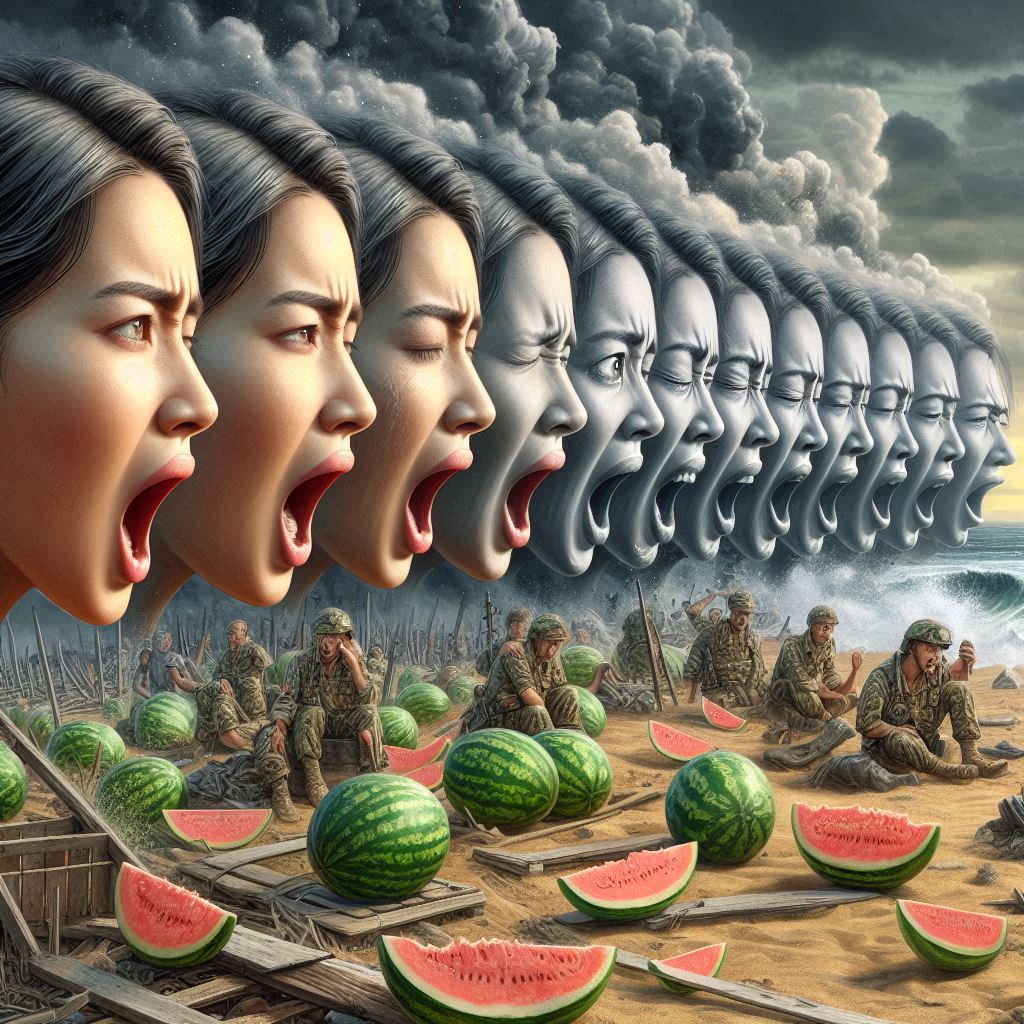
I don’t know about you guys, but I’ve been thinking about this very question for a while now—for around 11 months, to be exact.
In preparing a previous piece about loss aversion, I discovered this academic paper from 2007 titled ““If I look at the mass I will never act”: Psychic numbing and genocide” when searching for Paul Slovic’s biographical information. I knew I had to gobble it up as quickly as possible. It is a fascinating read mainly because it directly explores how masses of people can turn a blind-eye to a live-streamed genocide. The paper must be consumed by content creators of all types responsible for creating highly effective narratives that can potentially shape judgements made by decision-makers (i.e. American politicians, corporate leaders and generally uber-wealthy elites who help manage American interests domestically and globally).
I’m going to quickly summarize this paper as best as I can very early in the write-up just in case people don’t read the entire post. Professor Paul Slovic attempts to explain this phenomenon using research in behavioral psychology, ironically, some of this research conducted by prominent Israeli researchers, namely Daniel Kahneman and Amos Tversky. He explains that superfluous nature of statistics of genocides and mass murder events has the opposite effect on the public psyche. It’s difficult enough to get people’s attention these days, but it turns out that as numbers get larger and larger for genocides, the normally caring public gets bogged down by the increasing weight of something called diminishing sensitivity and begins to care less and less with each marginal casualty.
Some readers might wonder what such a number might look like? 100? Maybe 1000? Well, it’s actually 2!! My jaw dropped when I read it. Long story short, statistics detailing genocides don’t contain relatable human narratives such as names, images, videos, ages of victims that would typically trigger empathetic feelings and potentially serve as a domino effect to promote critical action required in stopping genocides. Even more depressing is the fact that once these emotions are triggered, bringing genocides to an end requires hyper-unbiased institutions that might initiate a response capable of stopping genocides and mass murder of people regardless of their race, ethnicity or socioeconomic situation. Once you finish the paper, you will probably be overcome with depressing feelings about the world at large. Even though this paper was written nearly 20 years ago, it brings up the exact institutional concerns that we are facing today with ongoing genocides in Sudan and Occupied Palestine.
From the paper’s abstract:
Every episode of mass murder is unique and raises unique obstacles to intervention. But the repetitiveness of such atrocities, ignored by powerful people and nations, and by the general public, calls for explanations that may reflect some fundamental deficiency in our humanity — a deficiency that, once identified, might possibly be overcome. One fundamental mechanism that may play a role in many, if not all, episodes of mass-murder neglect involves the capacity to experience affect, the positive and negative feelings that combine with reasoned analysis to guide our judgments, decisions, and actions. I shall draw from psychological research to show how the statistics of mass murder or genocide, no matter how large the numbers, fail to convey the true meaning of such atrocities. The reported numbers of deaths represent dry statistics, “human beings with the tears dried off,” that fail to spark emotion or feeling and thus fail to motivate action. Recognizing that we cannot rely only upon our moral feelings to motivate proper action against genocide, we must look to moral argument and international law. The 1948 Genocide Convention was supposed to meet this need, but it has not been effective. It is time to examine this failure in light of the psychological deficiencies described here and design legal and institutional mechanisms that will enforce proper response to genocide and other forms of mass murder.
Slovic P. “If I look at the mass I will never act”: Psychic numbing and genocide. Judgment and Decision Making. 2007;2(2):79-95. doi:10.1017/S1930297500000061
I’ll be honest, when I first read about diminishing sensitivity of large numbers, I instantly thought about all the numbers that have been flooding our feeds over the past 11 months. Figures linked to total deaths, estimated number of Palestinians who are buried under the rubble, total injured, lost structures, number of humanitarian aid trucks being allowed into the occupied territories, etc. If that wasn’t enough, months into the genocide, Lancet published a paper detailing that deaths attributed to the war could actually be up to 186,000 (which is a very conservative estimate at the time of the paper’s publishing back in July). If our brains are susceptible to such tendencies, you’d think biased western media sources would put more focus on such large mortality figures so that their audiences would care even less than they do, but as we’ve learned over the past decade, the mainstream media is its own worst enemy.
Let’s now continue with more thoughts from my personal reading. I read this on my Kindle so I was able to do plenty of highlighting of important excerpts.
My jaw dropped as I read the opening excerpt used by Dr. Slovic. He quotes Jonathan Glover’s book “Humanity: Humanity: A Moral History of the Twentieth Century” (you can read the first chapter @ NYTimes, of all places).
To avoid further disasters, we need political restraint on a world scale. But politics is not the
whole story. We have experienced the results of technology in the service of the destructive
side of human psychology. Something needs to be done about this fatal combination. The
means for expressing cruelty and carrying out mass killing have been fully developed. It is too
late to stop the technology. It is to the psychology that we should now turn.Jonathan Glover, Humanity, 2001, p. 144
The shock was definitely linked the reported use by the Israeli Defense Force’s (IDF) of artificial intelligence-enabled software to populate an endlessly long list of bombing targets (make sure to read Paul Biggar’s piece about IDF’s Lavender AI & Meta). Let’s just say there is a reason why Gaza looks the way it does. Fanned by the raging flames of genocidal revenge rooted in a large segment of its extremist society, the IDF employed an AI-powered hammer on its southern coast using software that was trained to think that every Palestinian man, woman, child, building, school, road, bakery, etc. was a shiny nail. When you code in tons and tons of Ethno-nationalist-centric biases and general hatred into a piece of software that is trained to hammer away without regard for any expense in terms of armaments, morality or reputation, you get painfully predictable results as pictured below (this is just October 9!).

America Is Not Good at Responding to Genocides
Dr. Slovic provides plenty of evidence for America’s delayed response to genocides and mass-murder events.
“Although President Bush has been quite unresponsive to the murder of hundreds of thousands of people in Darfur, it was Clinton who ignored Rwanda, and Roosevelt who did little to stop the Holocaust.” P. 2
“In a deeply disturbing book titled A Problem from Hell: America and the Age of Genocide, journalist Samantha Power documents in meticulous detail many of the numerous genocides that occurred during the past century, beginning with the slaughter of two million Armenians by the Turks in 1915 (Reference PowerPower, 2003, see Table 1). In every instance, American response was inadequate. She concludes, “No U.S. president has ever made genocide prevention a priority, and no U.S. president has ever suffered politically for his indifference to its occurrence.” P. 4
“I shall argue below that the disengagement exemplified by failing to “wrap our minds” around genocide and retreating to the “twilight between knowing and not knowing” is at the heart of our failure to act against genocide. Samantha Power’s insightful explanation is supported by the research literature in cognitive and social psychology, as described in the sections to follow.” P.5
The latter two quotes are quite ironic considering it comes from the same Samantha Power who currently heads up the United States Agency for International Development (USAID). It’s comforting to know that someone with so much knowledge in the area of genocides is one of the leaders inside an American administration that is currently overseeing not just one genocide of our generation, but two of them! Without a doubt, it will be interesting to see how western historians will cleanse Ms. Power’s reputation of all that genocidal blood and famine.
All Voting Districts Support Military Industrial Complex
Also, I think it is worth noting once again that pretty much every one of the 435 districts in the United States has some sort of defense industry-leaning job that is either directly researching, testing or manufacturing weaponry or offering consulting or technology that goes into aiding the military industrial complex. Let’s just say there are a lot of smart people working on this stuff—genuinely nice people who are fathers and mothers, people who have mortgages and drop their kids off at schools and day cares in the morning before heading off to design bombs that will be later dropped on families just like their own. If America funneled billions of dollars into an industry that built hospitals, schools, train tracks and roads inside not-so-wealthy countries around the world—you know, the same countries that it currently helps to bomb—our reputation in the world would be very different.
Narratives Are Important In Getting Humans To Show Empathy
On this topic, Paul Slovic provides a long list of evidence detailing how we are driven by relatable narratives.
“As Batson (Reference Batson1990, p. 339) put it, “… considerable research suggests that we are more likely to help someone in need when we `feel for’ that person …” P. 7
“One last important psychological element in this story is attention. Just as feelings are necessary for motivating helping, attention is necessary for feelings. Research shows that attention magnifies emotional responses to stimuli that are already emotionally charged.” P.7
“Research to be described in this paper demonstrates that imagery and feeling are lacking when large losses of life are represented simply as numbers or statistics. Other research shows that attention is greater for individuals and loses focus and intensity when targeted at groups of people.” P. 7
“American writer Annie Dillard, cleverly demonstrates the limitation of our affective system as she seeks to help us understand the humanity of the Chinese nation: “There are 1,198,500,000 people alive now in China. To get a feel for what this means, simply take yourself — in all your singularity, importance, complexity, and love — and multiply by 1,198,500,000. See? Nothing to it” (Reference DillardDillard, 1999, p. 47, italics added). We quickly recognize that Dillard is joking when she asserts “nothing to it.” We know, as she does, that we are incapable of feeling the humanity behind the number 1,198,500,000. The circuitry in our brain is not up to this task. This same incapacity is echoed by Nobel prize winning biochemist Albert Szent Gyorgi as he struggles to comprehend the possible consequences of nuclear war: “I am deeply moved if I see one man suffering and would risk my life for him. Then I talk impersonally about the possible pulverization of our big cities, with a hundred million dead. I am unable to multiply one man’s suffering by a hundred million.” P. 9
“There is considerable evidence that our affective responses and the resulting value we place on saving human lives may follow the same sort of “psychophysical function” that characterizes our diminished sensitivity to a wide range of perceptual and cognitive entities — brightness, loudness, heaviness, and money — as their underlying magnitudes increase.” P. 10
“They found that people’s ability to detect changes in a physical stimulus rapidly decreases as the magnitude of the stimulus increases (Reference WeberWeber, 1834; Fechner, 1860). What is known today as “Weber’s law” states that in order for a change in a stimulus to become just noticeable, a fixed percentage must be added. Thus, perceived difference is a relative matter. To a small stimulus, only a small amount must be added to be noticeable. To a large stimulus, a large amount must be added. Fechner proposed a logarithmic law to model this nonlinear growth of sensation.” P. 10
“Our cognitive and perceptual systems seem to be designed to sensitize us to small changes in our environment, possibly at the expense of making us less able to detect and respond to large changes.” P.10
I could go on and on with these excerpts, but more generally we are good with numbers that are more digestible (i.e. smaller) and narratives that are hyper vivid that can really grab our attention and sustain it in order to build up empathy. Such narratives might be direct stories about individuals who die—giving names of children, mothers, grandparents, brothers, sisters, etc. goes a long way to help. Stories containing images and videos will make these narratives even more powerful from an empathy standpoint. The entire goal is to trigger our emotions as deeply as possible and compel action.
Are Nation-State Biases Forcing the Hand of Political Actors?
But what about all those powerful people looking at these images filled with a steady stream of death and carnage? Why don’t those people rise up and stop such flagrant use of force? How do such intelligent people with expensive degrees from what are considered some of the world’s greatest universities allow a genocide to occur right in front of their eyes? Do they not own televisions and smartphones?
Two possible sources are to blame: Incentive-caused bias and self-serving bias. Both are very important assets of the modern nation state.
Pretty much every other nation wants the genocide to end, except a select few that are supplying a large portion of the weaponry and intelligence. They are essentially incentivized to keep the death and destruction going for as long as possible, mainly because it is a very profitable endeavor—not for the weapons manufacturing nation itself nor its aloof tax payers, but for the corporate leaders and investors behind the companies producing the weaponry.
Self-serving bias is a close cousin of incentive-caused bias, but not completely the same. Self-serving bias is deeply coded into each of us. This tendency to serve oneself is probably more acute in the elites who help manage the large corporations who supply the weapons, as well as the political leaders who keep the tax dollars flowing through these channels.
If you think about it more deeply, these tendencies are powerul driving forces behind capitalism and general nation states. Essentially, we must serve ourselves at the expense of others.
Where Humans Fail, Strong Institutions Must Come To The Rescue!
And finally, but most importantly, the only thing protecting us from this negative tendency to constantly serve oneself is some sort of institutionalized, all-encompassing or overarching power. In a modern & more secular construct, these powers would be held at well-respected institutions with a track record for making judgements on all actors, regardless of their race, ethnicity, financial clout, etc. In the old world, this power would reside with religious scholars and in a way, with a “higher power.” Behaving too negatively would trigger some sort of internal loss aversion that involves upsetting this ephemeral “higher power” and serve as a check on bad behavior. Those that continue to cross the line will develop a negative social reputation and people would begin to ostracize them on this basis.
Ultimately when human factors force us to not act over and over again when it comes to these genocides, humanity in the nation-state realm can only depend on strong institutions to serve as a massive, systematic check on bad decision-making or general inability to act behalf of human actors. Dr. Slovic closes his paper by stating exactly the problem humanity is currently facing:
“Most directly, deliberate analysis of the sobering messages contained in this paper should make it clear that we need to create laws and institutions that will compel appropriate action when information about genocide becomes known. However, such precommitted response is not as easy as it might seem.” P. 22
Genocides in Gaza & Sudan: Failure of the Nation-State
I hate sounding like such a nation-state hater, but it’s difficult not to be these days. There’s no other way to look at it. It will take a lot of work to figure out how to create more robust institutions to help manage completely avoidable, man-made catastrophes resulting in eye-popping death and destruction. Unfortunately (or maybe I should say, fortunately), there is no quick technological solution to this weak institutions problem. Just like mostly western people created bias-ridden institutions that have now failed to act for the past 11 months while an entire stretch of land is obliterated, those same humans will design tech-fueled applications that will be hard-coded with those exact same biases, except probably even more deadly and destructive. This is a problem that resides in humanity itself and the solution will need to come from there. At the beginning of his paper, Dr. Slovic somewhat sarcastically writes: ““Never again” has become “again and again.””
The youth of this generation must help create powerful narratives on all relevant social media channels and force the world to take action against all future genocides and mass murder events.
 Faisaling.com
Leave a comment