
The decentralization of communication, while making billions of dollars for the powerful tech elite, is allowing the common folk to understand each other. Literally.
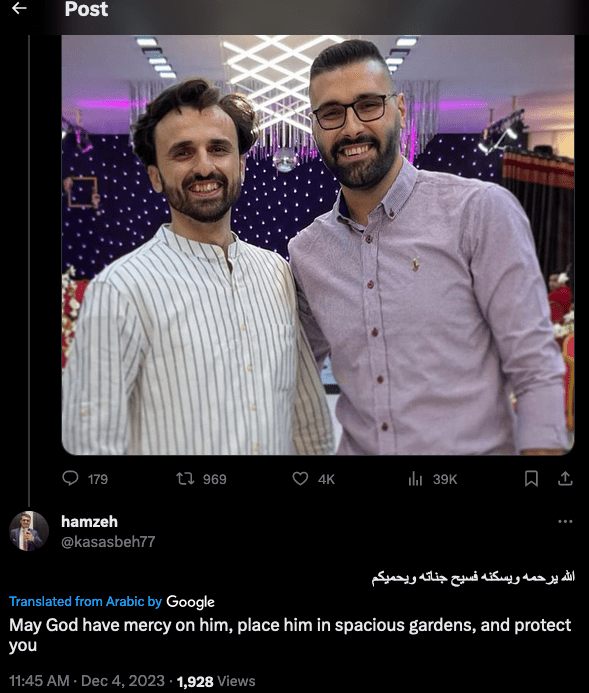
If you grew up in the western world (or Global North, to be more precise) post-9/11 and see Arabic text like “الله يرحمه ويسكنه فسيح جناته ويحميكم” littering your social media feed, you might be overcome with a peculiar feeling that is a mixture of guilt and living dangerously on the edge—almost as if you are reading a secret jihadist message between two terrorists about blowing up this or that, but now with helpful on-the-fly translation tools implemented into social media apps (examples in this post are via X), you can instantly learn that the above text translates to: “May God have mercy on him, place him in spacious gardens, and protect you.” It was a message of condolence attached to a post by Gaza-based journalist Motaz Azaiza after learning one of his friends had passed during a Israeli bombing of Khan Younis.
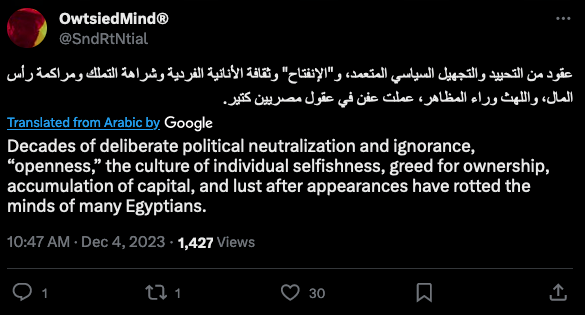
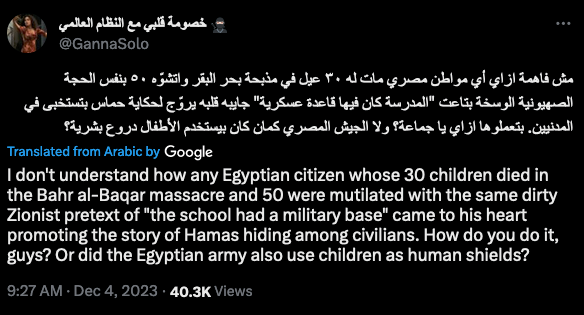
There are millions of such posts from any number of languages, whether it’s Hebrew or Hindi or Urdu or Spanish or Portuguese or whatever—all can be translated instantly to English for that sometimes fearful and anxious American wondering what hateful thing was said to him on the Internet.
Naturally, unlearning the years-long implanted fears associated with the other will take time. The process of re-humanizing the mysterious other will take even more time. This is only natural, but I can say with certainty the path is undoubtedly set. A global reunification of sorts is happening whether the powers that be like it or not—yes that includes the worst of the worst dictators to the worsts of the worsts capitalists or communists or whoeverist. If you have a heartbeat, you will have the opportunity to understand.
After watching painful videos and seeing gruesome photos of death and destruction over the past couple months, this recovery period will be slow. Each of those videos and photos featuring dust-covered faces or shroud wrapped bodies will need to balance with an equal number of videos of laughter, photos of parents embracing their children and long tables covered with delicious platters of food & drinks. Once the storm of Gaza passes and the dust from the unspeakable destruction settles, people will start to live again—just like they did during the all-too-brief respite of the recent humanitarian pause.
In just a matter of years, people will learn what has forever been obvious: humans around the world are very similar to each other. They have families, some of them they like, others they find annoying. People mourn when love ones die. They love their children more than anyone else. They love peace, security and sweet desserts. It is our differences that make us want to be around each other, talk to each other, learn from each other.
Of course there will still be haters. There will always be those who create trouble with words, who attempt to profit by dividing, but my bet is on humanity. The odds will be better than 50/50 that more and more people will talk to each other via these translation tools and learn to like each other, to rebuild long-lost global empathy. At the end of the day, if there was ever a silver lining to all this death and destruction, it will be that people from all around the world began talking to each other, learning about each other, trying to understand each other and arriving at some sort of consensus about common humanity.
پھر محبت ہو گی۔
Translate from Urdu: There will be love again.
 Faisaling.com
Leave a comment