
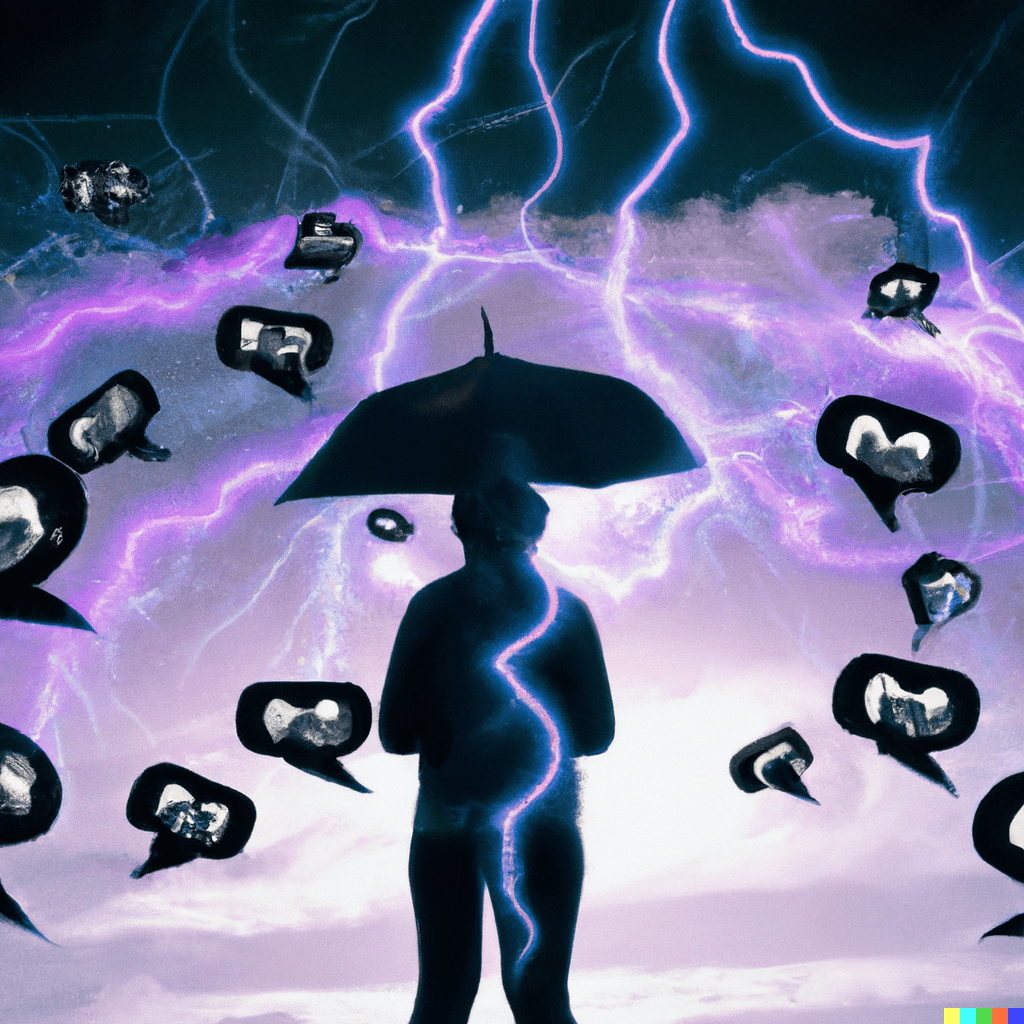
The question on the minds of many media analysts around the world is quite simply: What would the old guards of Twitter have done in policing content during this time?
After all Twitter—pre-Elon Musk—banned the former president of the United States, silenced others and probably took action preemptively or after the fact with countless other accounts that are far under the presidential radar, so who knows what would have happened with such a contentious conflict currently boiling over in the Middle East?
Would the world have seen videos from a man like Motaz Azaiza filming scenes of parents screaming for their kids under the rubble on the ground of bombed refugee camps or would those have been algorithmically silenced either internally or through a request from a mysterious government agency? Granted, Motaz has 10x more viewers on Instagram, but Instagram can’t exactly shut him down either if X won’t follow suit because that would risk losing engagement-driven ad-revenue, and possibly an exodus of users to other platforms. In a sense, Elon is keeping other platforms more “honest”—whatever that word means in the digital realm.
It is safe to say that Elon Musk’s ultra-libertarian approach to content moderation is like Israel’s decision to carpet bomb Gaza in hopes of killing off Hamas. Just like there will be countless casualties of innocent civilians in pursuit of the latter (as of 11/2/23: 9,376 civilian casualties of which 3,912 were children, Source: Euro-Med Human Rights Monitor), the former will allow a flood of painful truths to surface at the expense of increased misinformation campaigns waged by state-backed bots, propaganda machines, and average “human” extremists on both sides of the debate looking to spread hateful, divisive content purely to score engagement points.
There are countless other accounts that are similar to Motaz’s mentioned above and what these accounts do is create a steady stream of content that drives empathy for the dire situation in Gaza. How else would people learn about what is happening in Gaza? Fanning the flames of empathy is what is driving people not only to huge protests in every corner of the planet, but unfortunately, also further into filter bubbles of content that will only harden their “beliefs,” whether based on painful truths that regular mass media outlets won’t report honestly, half-truths that are fudged over by people who are either paid by Twitter directly by creating false, albeit very engaging, content or misinformation farms funded by bad actors—government and private.
Moderation is a word easier said than practiced. Needless to say, it’s a tough balancing act that Elon Musk and his team of engineers can’t possibly get their heads around and they are technologically humble enough to admit that to themselves (not publicly, of course)—and that’s saying a lot for a man who is known for his SpaceX-sized ego. If anything, Elon is proving that moderation seems to be a slippery slope—whether it is dealing with Trumpism, Covid or the Middle East. Human moderation is prohibitively expensive—not to mention inhumane in practice—and it’s far cheaper algorithmic version is borderline dictatorial when implemented. Until A.I. development reaches to the level of handling this job more accurately (and not to mention, more cheaply), we will have to deal with an X that will take us down information rabbit-holes—ones that will easily toy with our emotions, our understanding of facts, truths, half-truths and muddy waters of misinformation and disinformation that includes a lethal content mixture of all the aforementioned.
With all that said, what is a good strategy to stay balanced within a media landscape that makes its money pitting people against each other? One strategy that works is to diversify your media diet: in other words, moderation— except this is a different form of moderation. If you simply chew on sugary stuff that is provided by hyper-divisive/filtered feeds on X, Instagram, WhatsApp, TikTok or Telegram, besides driving yourself crazy, you will probably end up depressed or make yourself so unproductive that you can’t take any action, which includes sleeping and eating.
You must moderate the more visceral content that we find online with actions in the real world that will help you process the information overload that we are currently all experiencing. These actions can be as simple as grabbing tea with a few friends (physical connection is the key here!), reading a book—a physical book—that helps to contextualize the problems you are hearing about and making sure you read widely (maybe three different newspapers so you get a healthy mix of perspectives). I’ve been spreading myself between the Financial Times, LA Times, NewArab.com and Middle East Eye. Remember, the key is balance, so my recommendation would be to read maybe one or two (max) articles from each to achieve this goal.
Having said that, excessive imbalance can apparently make you filthy rich and Elon Musk is the quintessential case in point. He is the human-equivalent of a chameleon and when you digitize a chameleon, you get the variable x. X can be anything. One second it is crazy and irrational who is tweeting incessantly or discussing politics over joints of weed with Joe Rogan, while the next second it is solving complex business and engineering problems for SpaceX, Tesla or another one of his many corporations. Elon will be Elon. We average humans need more balance in order to survive and that will take some personal effort on our part. Until X/Meta/Google/TikTok figure out a way to monetize making us more balanced, productive and happy humans who understand and love each other, we must exercise some self-care in the meantime and try to achieve those empathy metrics by ourselves.
 Faisaling.com
Leave a comment