
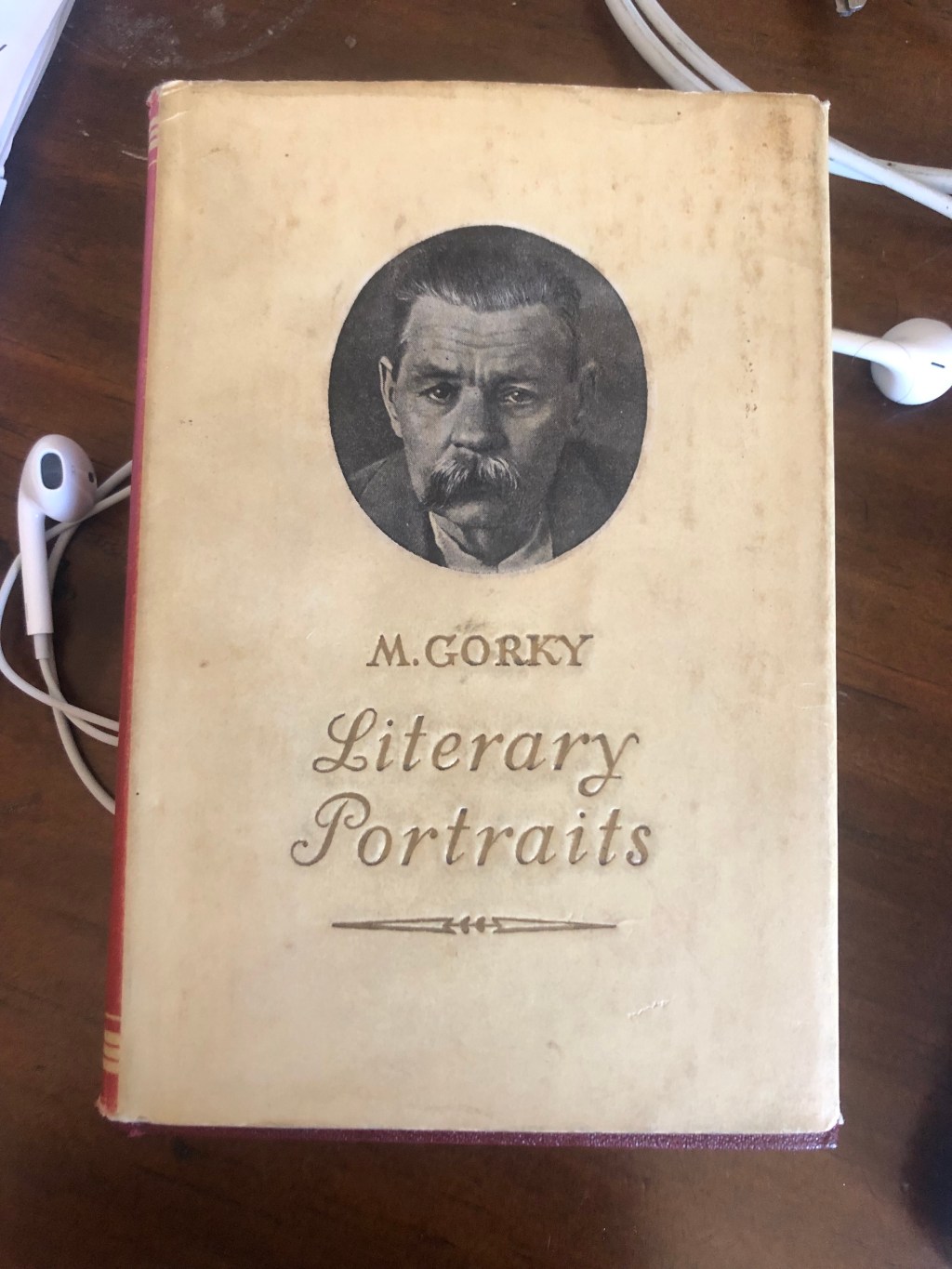
I’m the oddball who always has a couple Russian-flavored anthologies as part of my mini bedside selection of books. I should mention that I’m also the guy who can never pass up a used Russian anthology—whether it’s the same stories by a different translator from another age or quite simply, one with cool cover art! It’s always nice to get in a few pages of a Chekhov (sometimes that’s how long they are) or bits of an old Pushkin, Dostoevsky, Turgenev or Tolstoy to get one primed for interesting dreams (which might have some painful endings, of course). But the thing I find somewhat troubling is that I’m also reading these short stories during other parts of the evening when I normally consume other stuff.
Anyone else going through what feels like some sort of secret love affair? If you watch or read any news (in the “West”), it’s almost as if the world is supposed to sanction all things Russian. It’s a genre that is slowly inching its way to the guilty pleasure one feels when listening to one of Michael Jackson’s classic tracks, which of course I do from time to time—but unfortunately not when in the company of friends during a large party. It’s all very interesting, but maybe I’m trying to subconsciously push back against the dated (and certainly false) cold war narrative that Russia is bad and Russians can’t be trusted or aren’t good people.
This finally leads me to a collection of writings by Maxim Gorky titled “Literary Portraits,” in which he showers readers with jaw dropping details of his various encounters with Russian literary giants like Tolstoy and Chekhov (the translator Ivy Litvinov is seriously amazing, by the way). In this particular collection there are a few excerpts from a certain Mikhail Mikhailovich Kotsubinsky (is it possible to have a more Russian name?) in which Gorky quotes his subject on democracy:
“A ‘Journal of the Phenomena of the Humane’ should be issued annually—a sort of review of all man’s efforts during the preceding year to forward the happiness of mankind. It would be a wonderful handbook in which people could get to know themselves and one another. We’re more familiar with what is bad than what with what is good, you know. And its issues would be of extraordinary importance for democracy…”
Page 258, Gorky, Maxim. Literary Portraits. Foreign Language Publishing House-Moscow, 195?.
This kind of gives me a whiff of something Steven Pinker would write, but maybe not completely, since Mr. Pinker’s work is usually taking large datasets and reinterpreting them in such a way that ultra wealthy people like Bill Gates feel good about the state of the world (and about themselves). I still like the general premise though—i.e. take positive stories from all sides and get them out there so members of all algorithmically-fueled tribes know that there are good people in all parts of the seemingly divided political spectrum!
The other quote more directly references the positive elements of democracy—again, Gorky quotes Kotsubinsky:
“Democracy is always romantic, and that’s a good thing, you know. After all romanticism is the most humane attitude known to man. It seems to me that its cultural significance is not sufficiently appreciated. It exaggerates, of course. But it always exaggerates on the side of the good, proving how great the thirst for the good is in human beings.”
Page 259, Gorky, Maxim. Literary Portraits. Foreign Language Publishing House-Moscow, 195?.
These particular lines made me think about all the times I roll my eyes when I hear politicians dropping lines that unabashedly express American Exceptionalism. Maybe I need to stop rolling my eyes. This is simply another reminder to all of us that one of the other choices of government is a ruthless dictatorship wanting the head of anyone who goes against their wishes. I think it goes without say that certain people in the west need to see more concrete examples of the flip side to democracy so that they can appreciate their immediate situation and expend more energy in creating bonds between existing tribes as opposed to more divisions.
 Faisaling.com
Leave a comment