
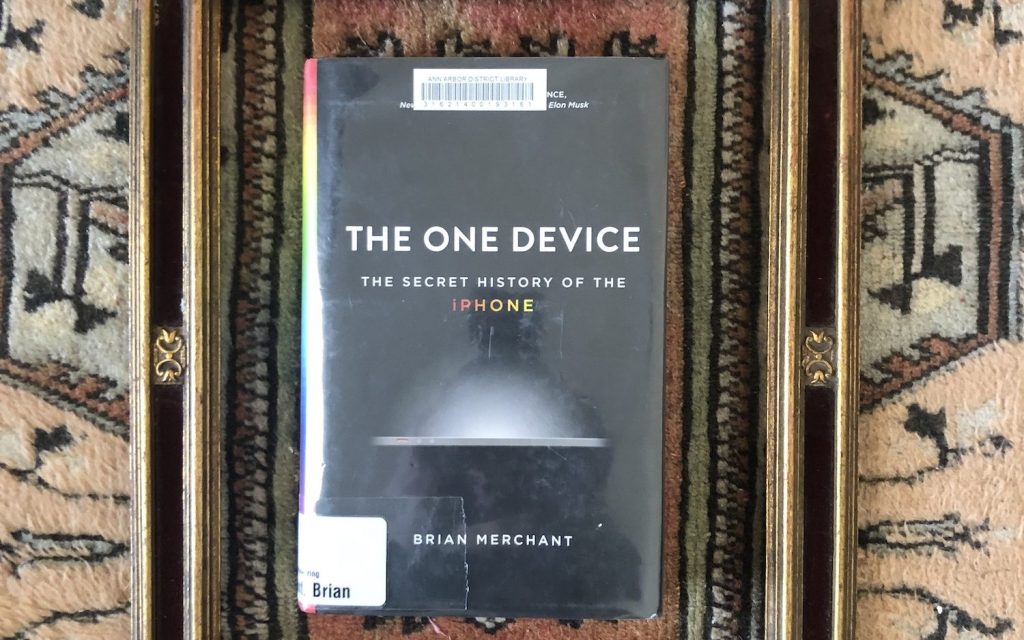
You can tell Brian Merchant probably had lots of fun writing this book!
The man got to travel around the globe and geek-out with very interesting (and insanely intelligent) people behind the scenes of one of the biggest tech breakthroughs since…since—I’m having trouble thinking of a similar gadget or device simply because the device in question wasn’t exactly the first of its kind, but at the same it, it was wildly revolutionary in terms of redirecting the marketplace. In other words, I don’t want to give the iPhone more credit than it deserves, but at the same time, I want to make sure I give it all the credit that it does deserve. It’s obviously very confusing. After all, the iPhone is and forever will be the “One Device” and the special company behind it deserves all $3 trillion of monopoly-fueled credit for its ability to design and market something so freakishly addictive.
Brian Merchant adds a tremendous amount of context to the phone’s somewhat elusive origin story. Apple’s near-paranoid penchant for extreme secrecy doesn’t necessarily make creating new origin narratives easy. The longstanding narrative goes like this: “Steve Jobs is a total genius. He saw an early prototype he thought had potential and then had his minion engineers remake it 15 more times before he found the exact design he thought people would love. Steve Jobs is a total genius.” Merchant tries to de-mystify Steve Jobs near-mythical greatness, but I don’t think that’s going to be easy to do in just a single book. Steve Jobs was a famous asshole extraordinaire during his lifetime and everyone knew it, but to his credit, when you’re top dog surrounded by other top dogs, you have to out-asshole everyone in the room in order to get the job done.
What I particularly enjoyed about this read was that Merchant tried his best to view the device from different perspectives. Of course, there is the pure geek perspective mentioned above concerning the phone’s origin story that will make many readers thirst for more details. The moral perspective is one that will resonate with many, as well. The amount of natural and human resources it takes to crank out an iPhone will make you want to use your current phone a few years longer than you typically do. Let’s just say little children—upwards of 7000 kids (some as young as 6!) as discovered by UNICEF—are freelancing as miners at the Cerro Rico mine in Bolivia. I won’t even go into the long list of other materials that are mined all around the world to help create the iPhone, but Merchant briefly covers most of them. He even covers all the e-waste that is generated by the industry. The human costs don’t exactly stop with the mining industry because Merchant cites a number of suicides that have occurred at Foxconn over the years during the actual production of the iPhone. It’s all very painful, but that’s the price of wild consumerism.
As you can see, the book spans many topics—too many to stuff into a simple review. If you are anywhere within inhaling distance of Geekville, you will definitely enjoy reading “One Device” and learn a lot more by the time you finish.
 Faisaling.com
Leave a comment