
I’ll be honest, I am not a big history buff when it comes to Islam, but I have always remained very curious.
Getting the pleasure to slowly chew and digest this book came down to simply good ‘ole random luck. The same way you probably arrived at this completely random blog post is the same way you will ultimately read this book. Literally, random luck.
Now that I have made you feel special, I will lean on a quote that Ben Franklin made famous: “Diligence is the mother of good luck.” In other words, the ability to be very systematic in consistently taking those baby steps when it comes to knowledge acquisition—reading one word after the other, while turning from one page to the next you’ll notice that you get lucky more often than others when it comes to discovering literary gems. This book definitely qualifies as one of those rare gems, my friends.
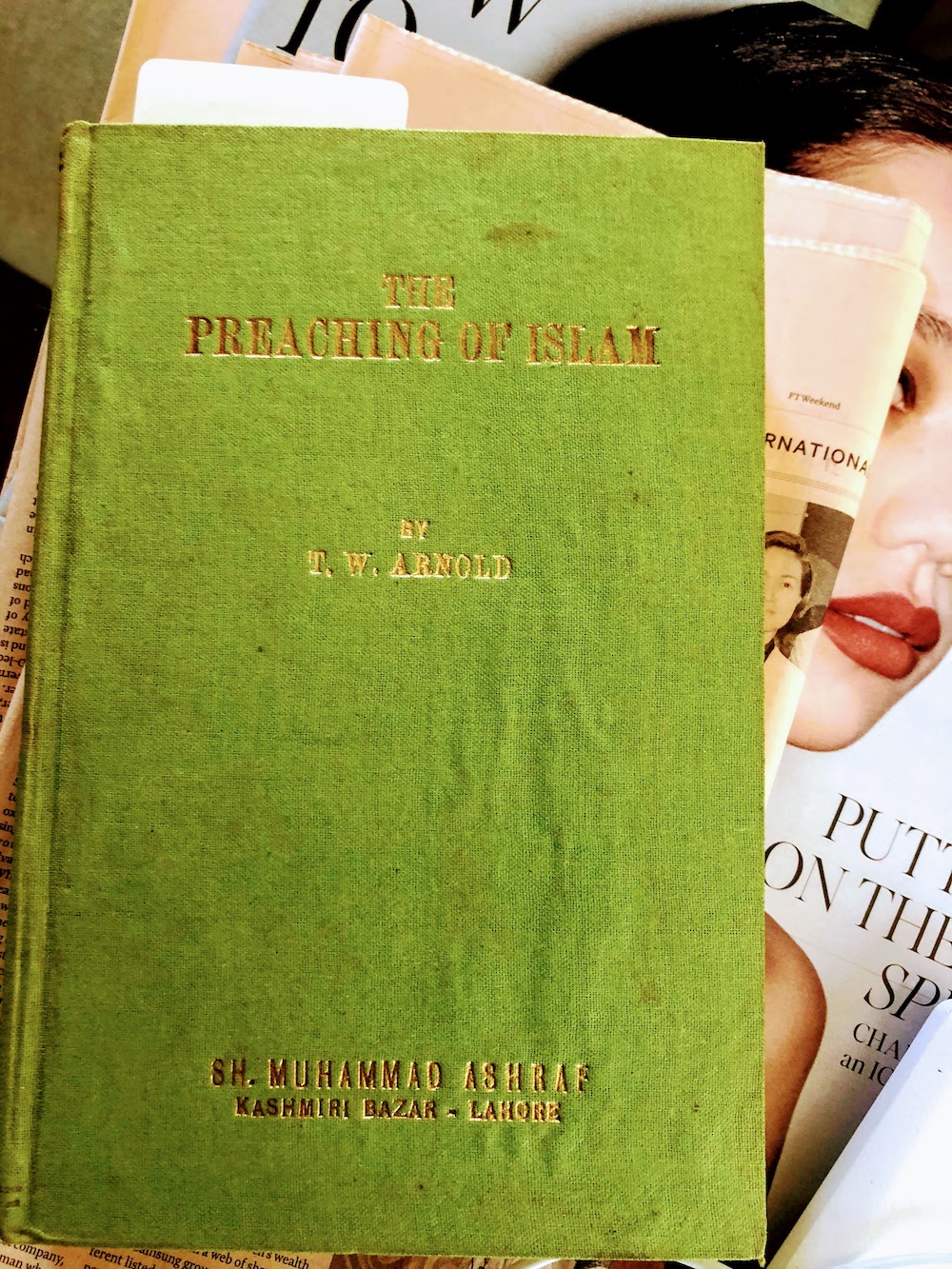
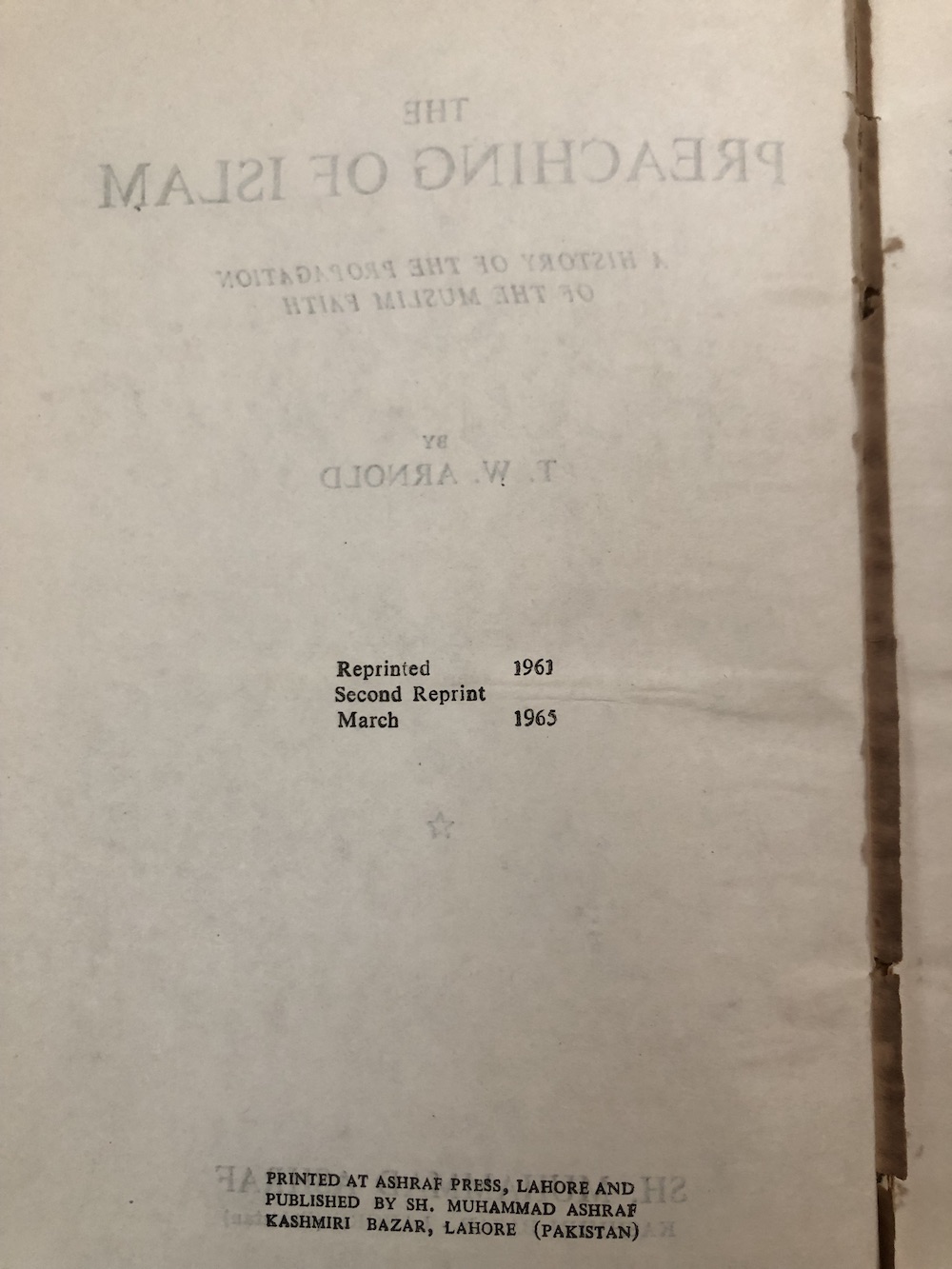
With that said, let me finally resume my mini-book review of Sir Thomas W. Arnold’s epic piece of work: The Preaching of Islam: A History of the Propagation of the Muslim Faith. I’m including a photo of my edition of the book (1965) since it predates an updated version that was published more recently. Follow the Wikipedia link to learn more about the author.

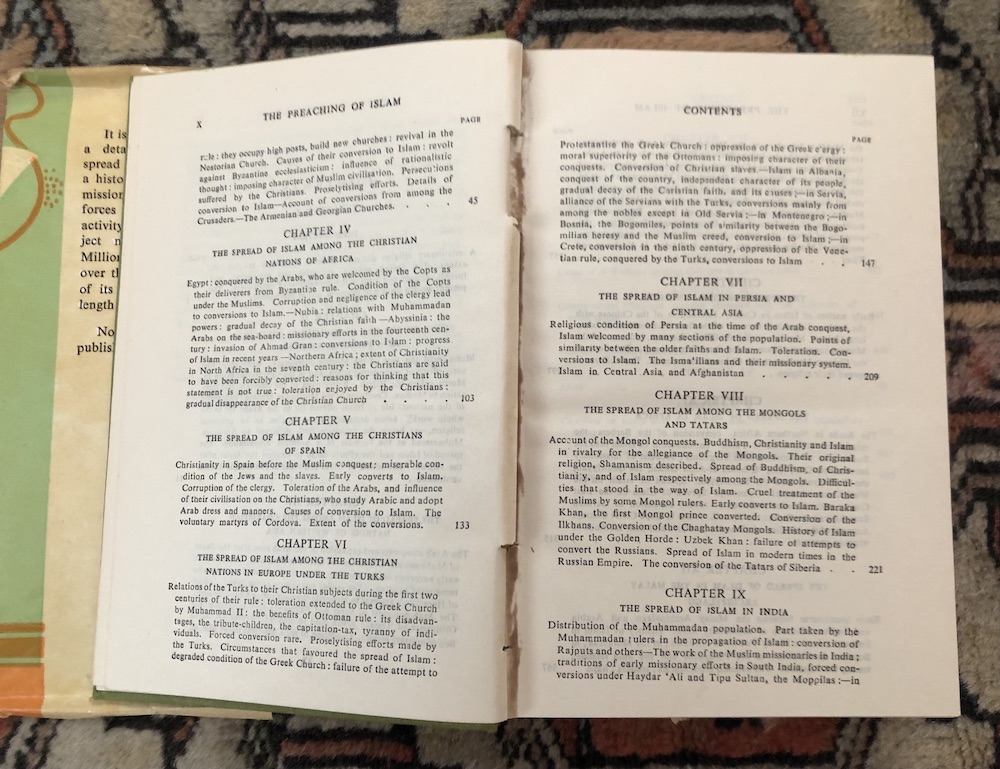
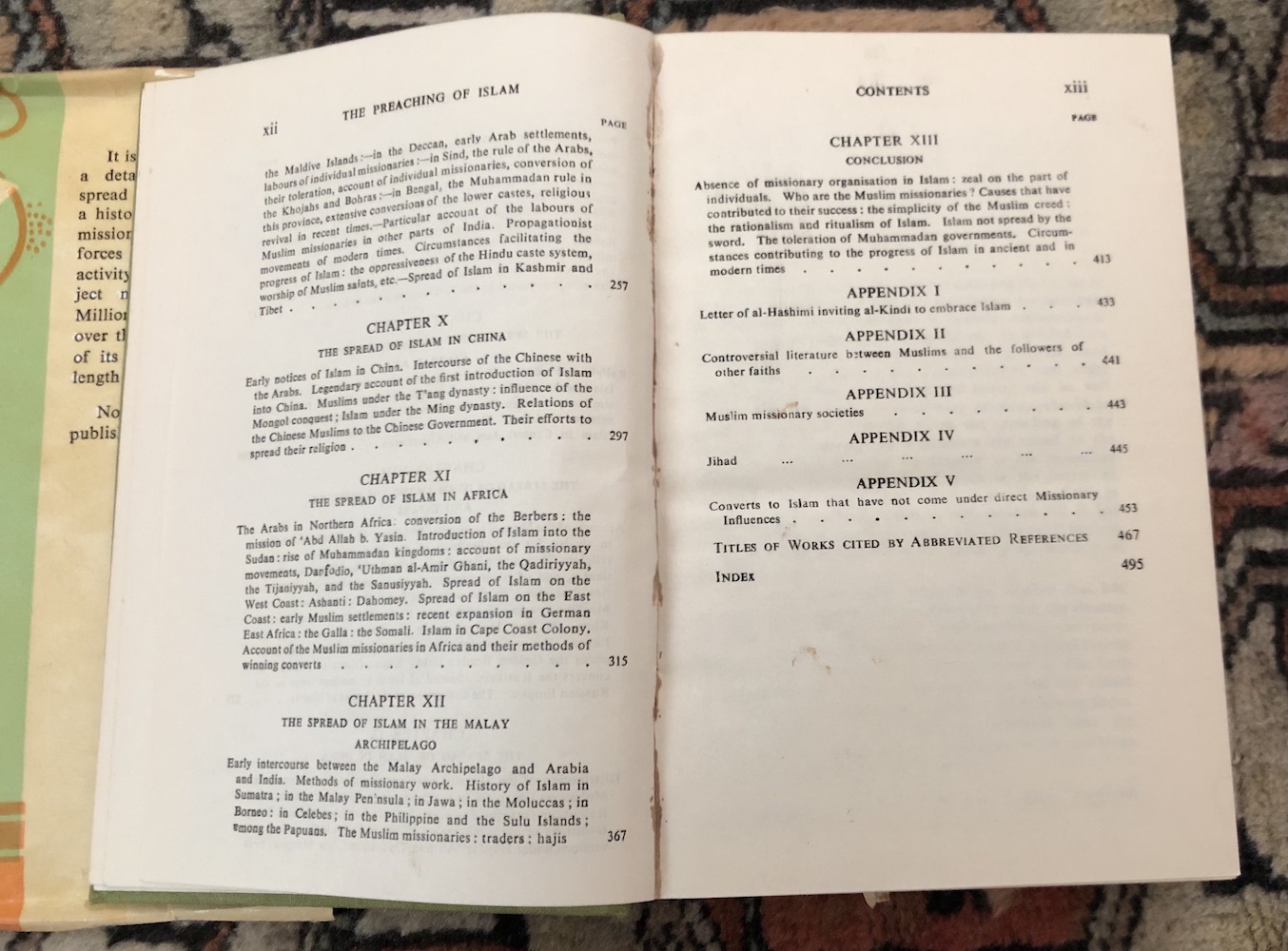
You’ll notice by the photos of the contents section that the book is nicely divided into various regions of the world in order to make the final analysis easier for readers to understand. Arnold does a wonderful job in going into detail within in each region and giving the story of how Islam spread in context of what was happening locally.
One thing that I learned right away was that Islam largely spread by way of being the more tolerant option to what people had available to them. Of course modern narratives of the religion will paint a far different–and bloodier–picture. We all know the Islamophobic take on this issue, but even within pockets of Islamic world, there is this over-glorification of the link between violence and Islamic conquest. Take the Turkish-produced “Ertugul” series, for example. A large number of Muslims probably think that the extreme amounts of violence played a very critical role in the spreading Islam to large swaths of the world, but when you actually dig into Islamic history, this couldn’t be further from the truth. This version of Islamic history serves as a soothing balm in a way to a growing population of somewhat despondent Muslims around the globe, who only learn about death & defeat when it comes Muslim nations as reported by popular media.
“In the hours of its political degradation Islam has achieved some of its most brilliant spiritual conquests: on two great historical occasions, infidel barbarians have set their feet on the necks of the followers of the Prophet,—the Saljuq Turks in the 11th and Mongols in the 13th century,—and in each case the conquerors have accepted the religion of the conquered. Unaided by temporal power, Muslim missionaries have carried their faith into Central Africa, China and the East India Islands.”
Pg. 2, Arnold, Thomas. The Preaching of Islam. Ashraf Publication, 1965.
Believe it or not, but Islamophobia isn’t a modern phenomenon in any way. Arnold is very quick to counter western intellectuals in how they tend to portray Islamic conquests over time. He makes his stance on the issue very clear at the book’s onset.
“Moreover it is not in the cruelties of the persecutor or the fury of the fanatic that we should look for the evidences of the missionary spirit of Islam, any more than in the exploits of that mythical personage, the Muslim warrior with sword in one hand and Qur’an in the other,—but in the quiet, unobtrusive labors of the preacher and the traders who have carried their faith into every quarter of the globe. Such peaceful methods of preaching and persuasion were not adopted, some would have us believe, only when political circumstances made force and violence impossible or impolitic, but were most strictly enjoined in numerous passages of the Qur’an, as follows: …”
Pg. 5, Arnold, Thomas. The Preaching of Islam. Ashraf Publication, 1965.
At this point, very early in the book, Arnold goes on to cite passage after passage from the Qur’an to show how Muslims are advised against unnecessary force and compulsion of their religion upon people. Compassion, patience and tolerance are pushed forward as Islamic ideals to espouse as opposed to violence and war that we are nudged to believe.
I could go on and on with countless quotes from my personal notes, but I intentionally want to keep this review short and sweet. If I can figure out a way to put my notes up here, I will do that in the future, but I want to give prospective readers a simple taste of the journey they will take with Mr. Arnold as their highly informed tour guide.
Regardless of whether you are Muslim or not, this is a must-read for all. Don’t forget to come back and comment below with your thoughts after you finish.
 Faisaling.com
Leave a comment