
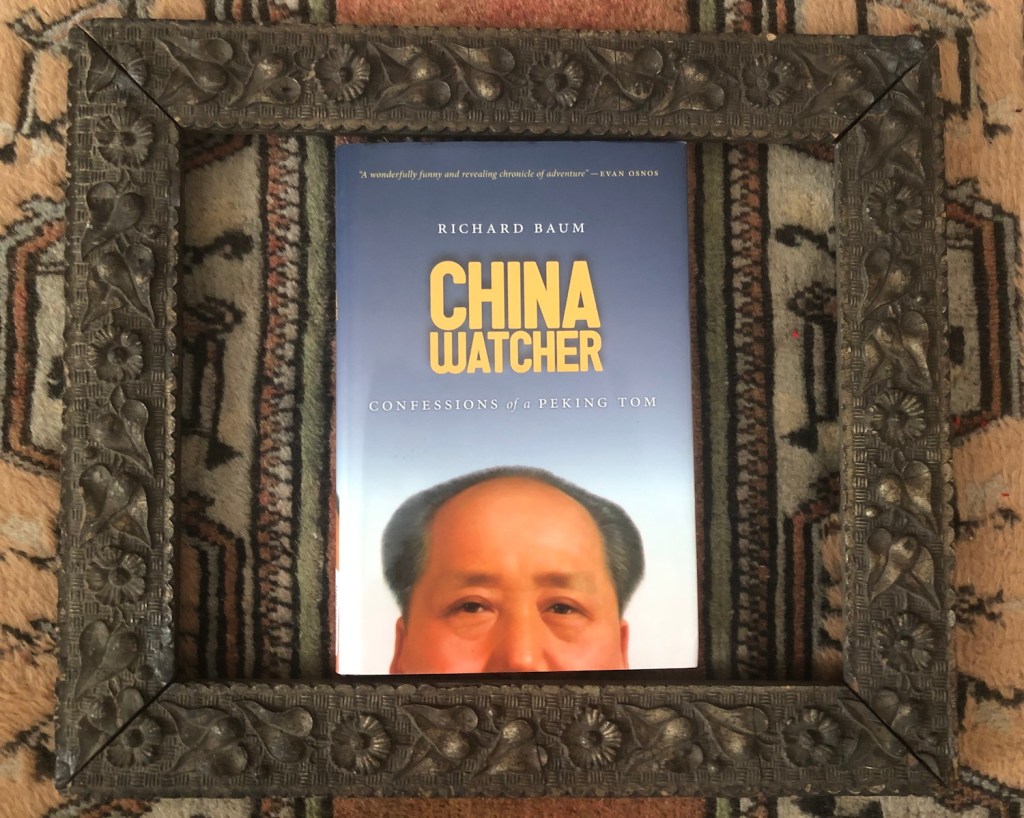
The late Richard Baum explains China like Warren Buffet explains value investing. They both have that somewhat whimsical spark that literally pulls you in and then makes you keep craving for more.
I was first introduced to the former UCLA professor emeritus of political science through a local library download of his very special “Fall and Rise of China” course at The Great Courses. This is an excellent introduction to modern-day China for those interested. When you listen to him going off-topic to give some personal insight on a particular topic, you’ll know exactly what I am talking about when I say the man had a special spark to him. Let’s just say, he was a special type of teacher who came alive if you were lucky enough to grab a coffee with him after class.
I’ve had an autographed copy of professor Baum’s memoir sitting on my bookshelf for years and I finally chewed my way through it last month (I bought my copy used and it was also unread because it still had a receipt from Borders inside it—i’m guessing it was owned a U of Michigan professor b/c the signed note from Baum reads, “From one Berkeleyite to another.”). All of his anecdotes in there really made me get upset at myself for not patiently going through the painful Chinese Visa process and backpacking my way through China. It had been on my list of places to travel for the longest time, but I never got around to it only because of the hoops you must jump through in order to go there.
Regardless, my other big take away following the read is one of great respect and adoration for the writer. Professor Baum knew exactly what he was talking about and he wasn’t afraid to tell it like it is. He made some very prescient predictions as to how things will play out globally and how US and the rest of the world should approach China once it has fully risen. Let’s just say that he would have been extremely upset if he had lived through the Trump years.
Before I close, I want to include one of Baum’s closing paragraphs about the future of US-China relations:
We should not, however, expect even a substantially cooperative, converging China to take a back seat indefinitely to unilateral American power, influence and interests. As China continues to rise, it will inevitably be drawn to probe the limits of U.S. regional and global dominance and spread its wings as an independent force in world politics. As much as Americans may resist the idea of sharing the global stage with an energetic self-confident Chinese peer competitor, such an accommodation will have to be made. The alternative is a new cold war—and the very real possibility of a hot war. In this respect it is the united states, rather than China, that faces the more daunting challenge, the challenge of gracefully accepting the eventual, inevitable diminution of its own unipolar global dominance.
China Watcher: Confessions of a Peking Tom, p. 275
Without a doubt, this is a very important read if you want a real China Watcher’s take on the future of global politics and economics because let’s face it, China is here to stay and it will only get bigger with time.
 Faisaling.com
Leave a comment