
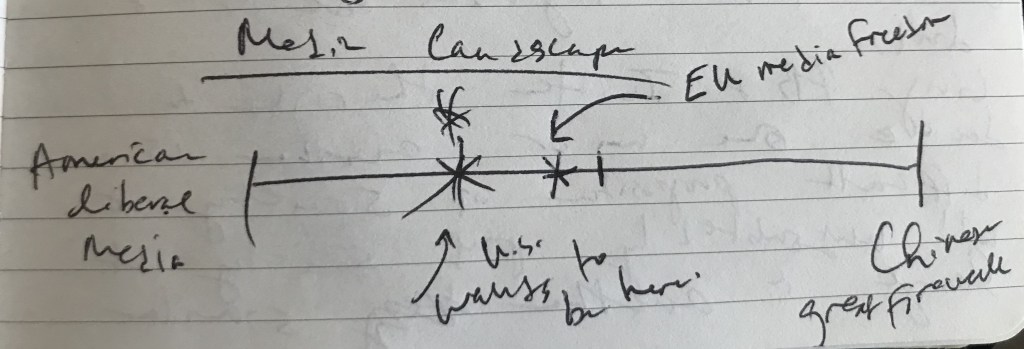
Depending on your political leanings and also how close you may reside to the edges of the political spectrum will probably dictate how you feel about Donald Trump getting thrown under the censorship bus by social media companies.
A combination of self-serving bias and its close relative, incentive-caused bias, are having a psychological field day when it comes to making judgements during these times of uncertainty. People will shower these companies with a long list of charges, but can you actually blame them? Trust me, I spend a lot of time thinking about this stuff and want to put the blame on someone, but that is easier said than done. Thankfully, the damage is so vast that there is plenty of blame to go around to all parties involved.
As for the tech companies, they are corporations after all and as corporations within a liberal democracy, they must simultaneously appease multiple parties. Think about it, these companies have to think about millions of investors, mega advertisers, government laws, employees, board of directors, countless millions of users, etc., etc.—and not necessarily in that order of importance, but probably close to it.
Let’s now review how various interested parties view Big Tech’s recent actions. I will have more on this later, but I wanted to get some of my thoughts down for the record.
Investors
Judging by the stock prices following these actions, investors can’t possibly be happy about Big Tech’s actions, especially the ones that manage the content and largely depend on advertising as a main source of revenue. You must understand that controversy, conspiracy theories, and general misinformation—especially sensationalized misinformation—are critical drivers of interaction on these platforms. The more users interact, the more advertising gets displayed to them.
Democratic System
Proponents of democracy are worried. It’s somewhat counter-intuitive when it comes to Donald Trump getting de-platformed because you would assume that is a reasonable decision heading in the right direction when it comes to upholding democratic values, but sadly that is far from the case. If the decision were made as a reaction to well-codified government-mandated laws, then more power to the democratic institutions responsible for those laws. Unfortunately, the decision to silence Donald Trump by the platforms was made by the corporations themselves. The decision to remove Parler off Amazon’s servers was made by Amazon. The decision to remove various apps from Apple and Google were made by those corporations. If these corporations acted because laws were broken, we wouldn’t be in this situation in the first place. Maybe this is something that needs to be wrestled over in the coming months as the government takes a closer look at Silicon Valley monopolies.
Users
When analyzed superficially, this appears to be a zero-sum game where users on the left win and users on the right lose—at least in the context of the DJT de-platforming decision. I’m in the school of thought that all users lose. In short, the more voices, the better. Having said that, if better ground rules were in place to control our behavior online, similar to rules in the real world, I think we would be in a better place. Sadly, it doesn’t work that way on the internet since there is really no precedent in terms of creating applicable laws for a digital democratic society. If you live in a more authoritarian environment, regulatory decisions are more black and white and algorithmically managed, but within a liberal democracy context, decision-making is far more uncertain. The events of January 6th, 2021 will change this dynamic since democracy has gotten a taste of a world where there are little or no rules for controlling behavior on the Internet. Most importantly, the rules and regulations must come directly from the government—call it big brother or whatever—but not hidden away inside a convenient corporate Terms of Service document that can be exercised when blood is flowing the streets.
 Faisaling.com
Leave a comment